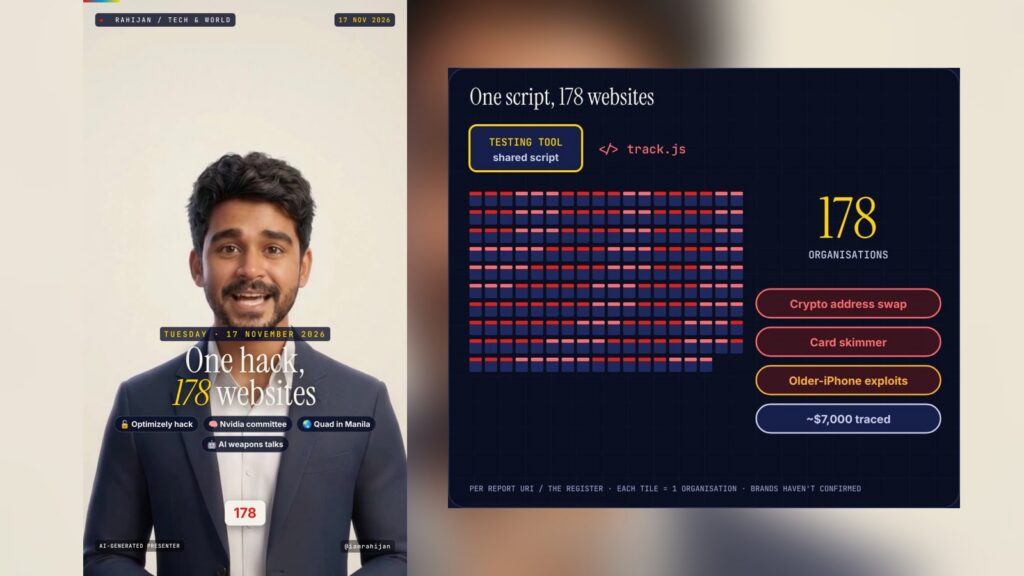
17 November 2026 edition · Published 17 November 2026. One hack turns a popular website-testing tool against 178 organisations, Nvidia’s board sets up a national security committee days after its CEO quit, the Quad leaders meet in Manila for the first time in two years, and countries in Geneva argue over rules for autonomous weapons. Today’s video is presented by an AI-animated version of me.
Summary
- Optimizely hack: attackers planted malicious code in Optimizely, an A/B testing tool, on Monday. Researchers say it reached 178 organisations, swapped crypto wallet addresses and skimmed card details. Optimizely says it has fixed the flaw.
- Nvidia: the board created a standing committee for national security, export controls and trade risk, days after Jensen Huang resigned. CFO Colette Kress is interim CEO.
- Quad in Manila: the US, India, Japan and Australia held their first Quad leaders’ summit in two years, announcing a 2027 maritime patrol exercise and new critical-minerals deals.
- Autonomous weapons: the UN’s CCW review conference in Geneva (16–20 November) is deciding whether to open talks on binding rules. The US wants a non-binding text.
1. One hack, 178 organisations
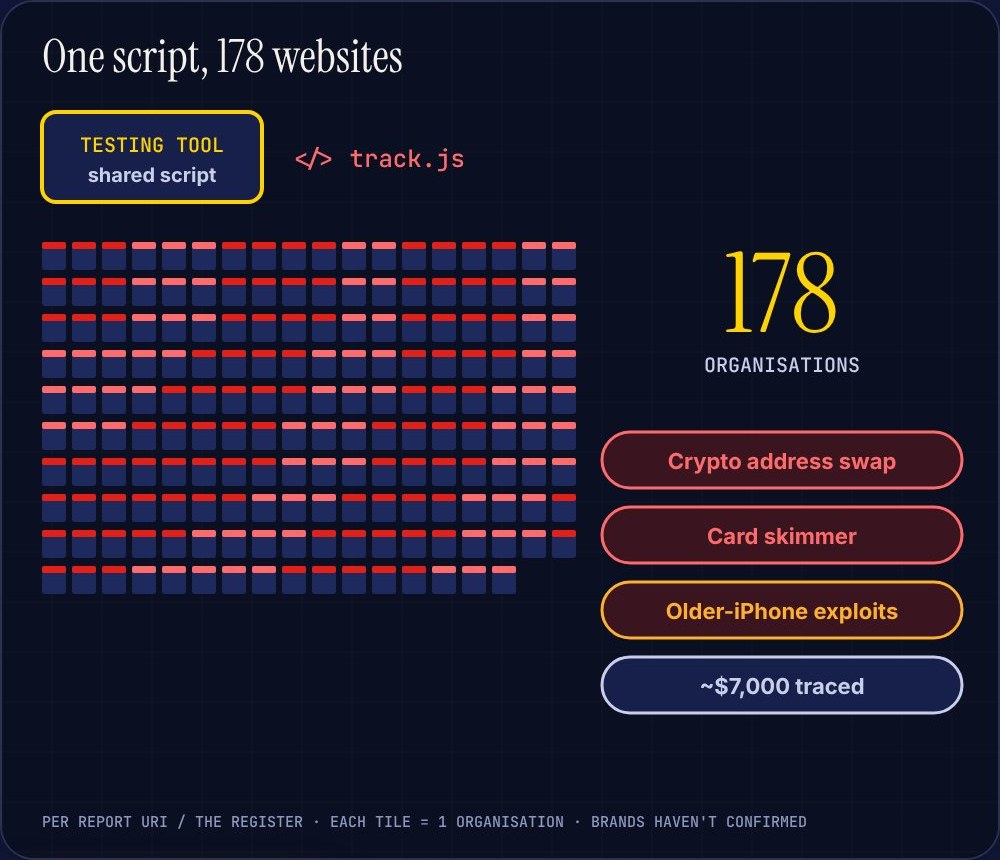
On Monday 16 November, malicious JavaScript was served to visitors of websites that use Optimizely Web Experimentation, a tool companies use to test different versions of their pages. Security researcher Scott Helme of Report URI says his team checked 1,611 Optimizely scripts and found 188 carrying malicious code, covering at least 178 organisations (The Register, Gizmodo). Researchers named sites including the BBC, CNN, Zoom, HSBC, IKEA and Salesforce. None of the named companies had commented publicly at the time of writing.
According to the researchers, the code swapped copied cryptocurrency wallet addresses for the attackers’ own, later added a card skimmer that captured details typed into a site’s own forms, and tried to load exploit kits on iPhones and iPads running older versions of iOS. Report URI traced about $7,000 to the attackers’ wallets within nine hours. Optimizely said an unauthorised party exploited a vulnerability in its account signup flow, and that it has “fixed the vulnerability and removed the injected code from affected projects” (The Register).
If you visited one of these sites on 16 November: check any crypto transfer went to the address you intended, look for unknown card charges if you typed card details into a site’s own checkout, and update your iPhone or iPad to the latest iOS. Visiting a site does not by itself mean your data was taken (Newsweek).
2. Nvidia sets up a national security committee
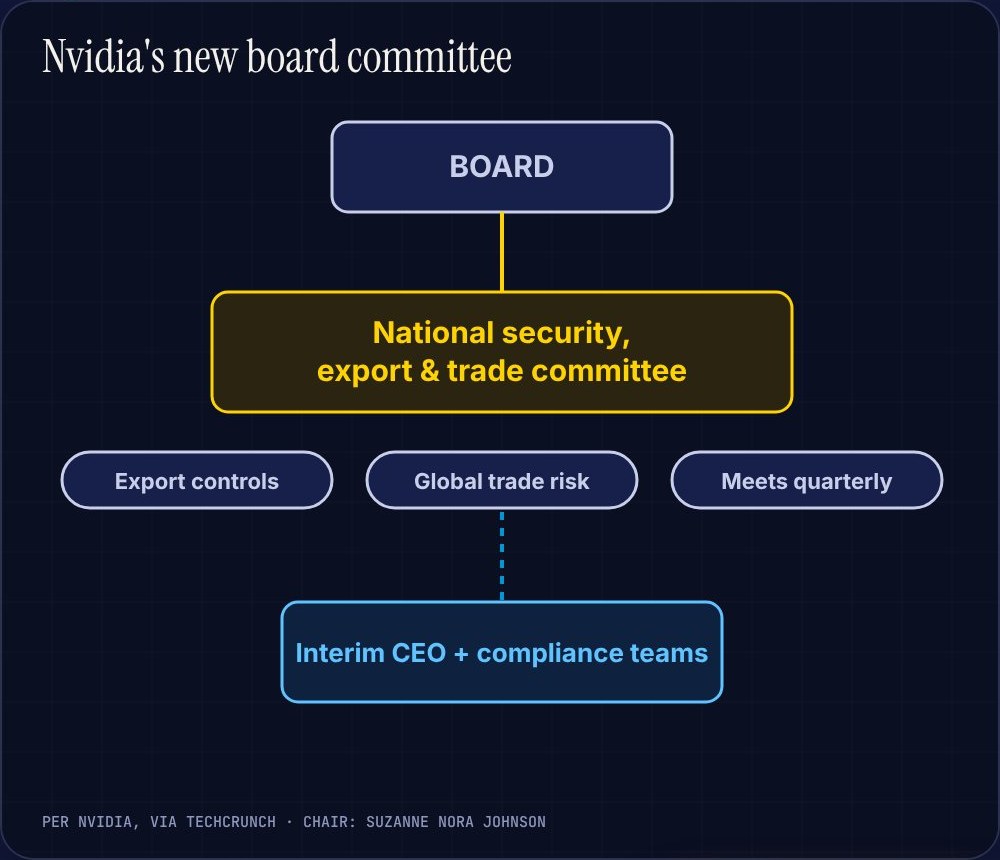
Nvidia’s board announced on Tuesday a standing committee to oversee national security policy, export-control compliance and global trade risk. It is chaired by Suzanne Nora Johnson, with Stephen C. Neal and John O. Dabiri, and will meet at least quarterly; Nvidia’s existing national security and trade-compliance teams now report to it and to interim CEO Colette Kress (TechCrunch).
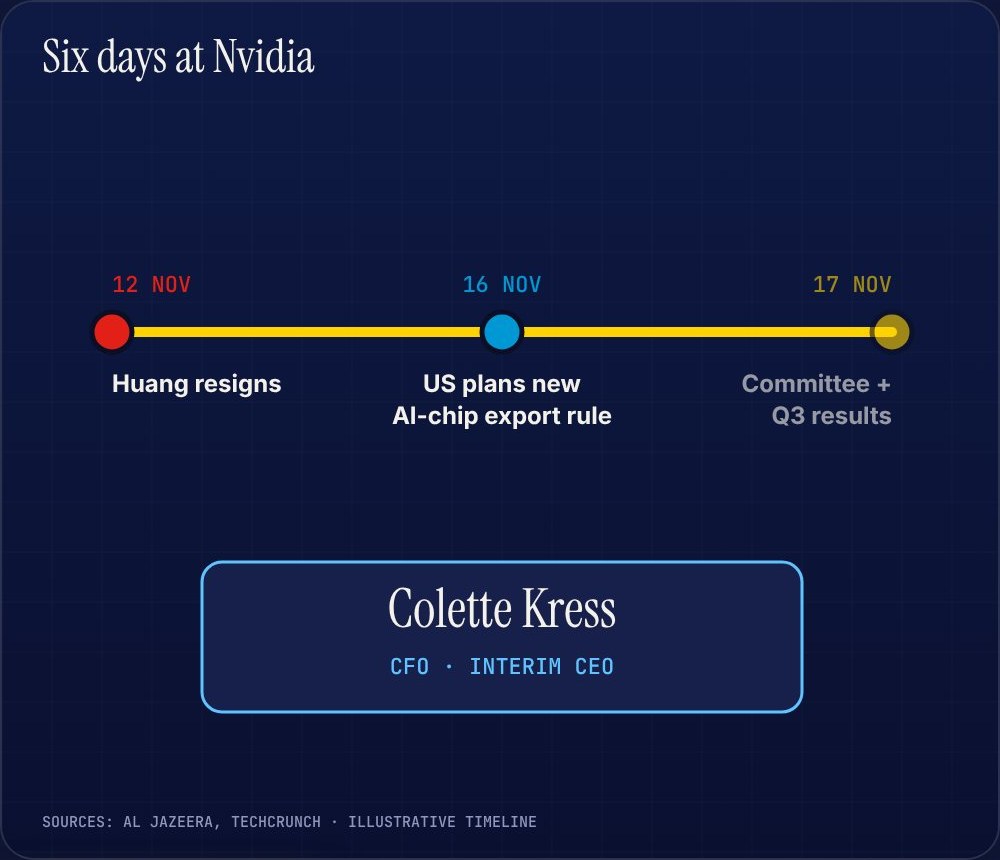
Jensen Huang stepped down as chief executive and left the board on 12 November; Nvidia did not give a reason (Al Jazeera). Kress, the company’s CFO since 2013, is running Nvidia while the board searches for a permanent CEO. The move comes a day after the US Commerce Department said it plans new export controls on AI chips used in data centres abroad, and on the day Nvidia reports its third-quarter results. TechCrunch reports Huang has agreed to testify before Congress later this month.
3. The Quad meets in Manila
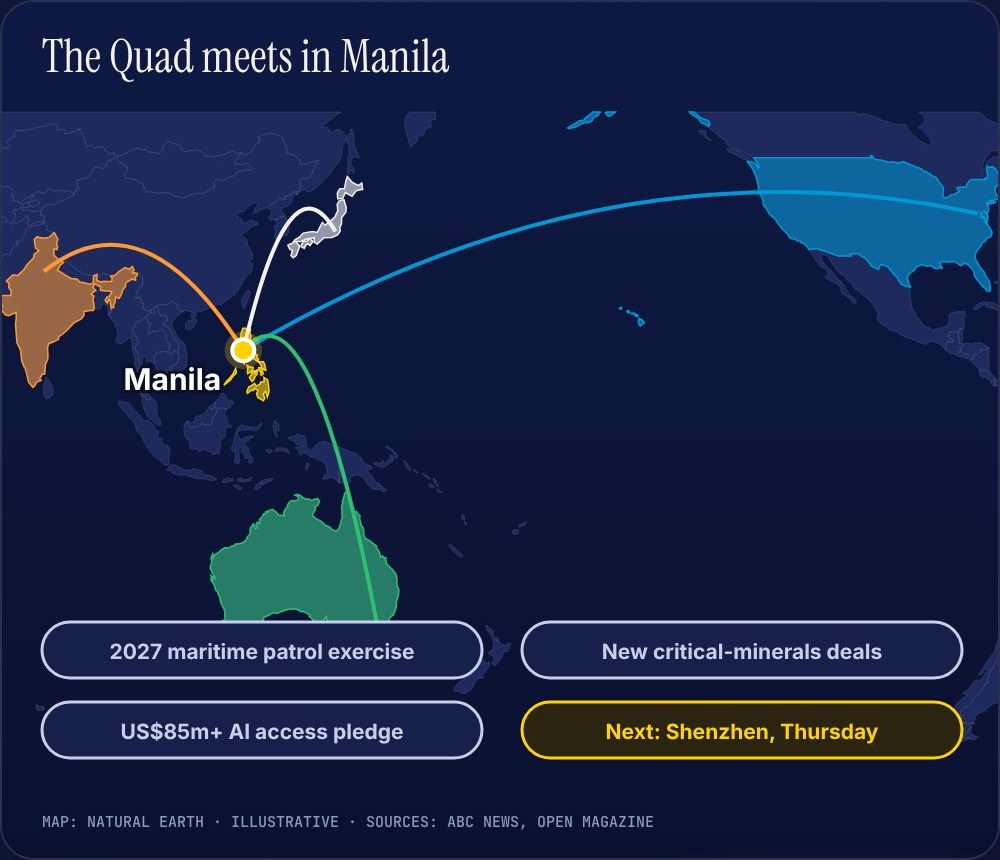
President Trump, India’s Prime Minister Narendra Modi, Japan’s Prime Minister Sanae Takaichi and Australia’s Prime Minister Anthony Albanese met in Manila on Tuesday, the first Quad leaders’ summit in two years and the first since Trump returned to office. ABC News reports the leaders unveiled new defence and critical-minerals deals; Open Magazine reports a first joint maritime patrol-aircraft exercise planned for 2027, a maritime surveillance partnership and a pledge of more than US$85 million to widen access to AI. The joint statement voiced concern about economic coercion, including arbitrary export restrictions.
Trump is due in China next, with APEC meetings and a planned meeting with Xi Jinping and Vladimir Putin on Thursday.
4. Geneva debates rules for weapons that choose their own targets
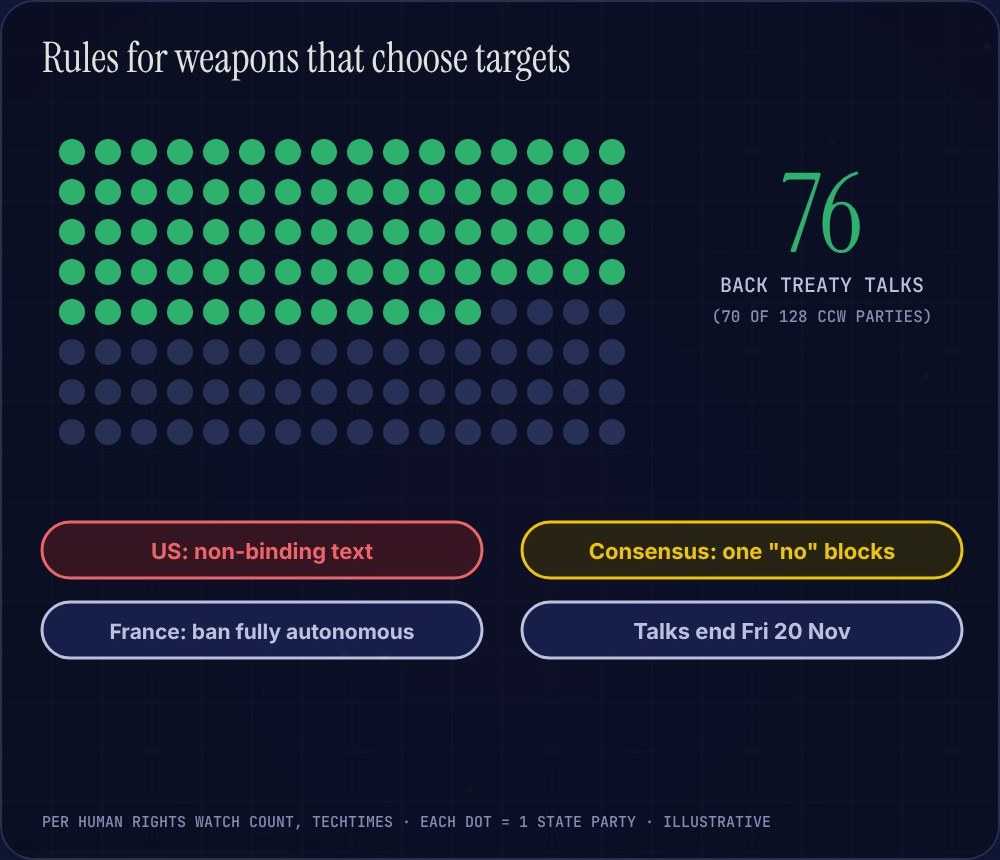
The Seventh Review Conference of the Convention on Certain Conventional Weapons opened in Geneva on Monday and runs until Friday 20 November. States parties are weighing competing texts on autonomous weapons systems, from a draft that would open negotiations on a new protocol to a US paper proposing several more years of work towards a non-binding instrument (TechTimes). Human Rights Watch counts 76 states, 70 of them CCW parties, that back negotiations on a treaty.
The CCW works by consensus, so a single state can block a negotiating mandate. Reports say the US and Russia oppose binding rules, and Israel opposes a timetable; the US position is set out in its own paper.
Sources
- The Register: Optimizely hack turns world’s biggest websites into malware dispensers
- Gizmodo: Sprawling malware attack reportedly affects Zoom and 170+ others
- Newsweek: Cyber attack hits 178 major websites
- TechCrunch: Nvidia’s first big move after Jensen Huang’s exit targets national security
- Al Jazeera: Why did Nvidia CEO Jensen Huang resign, and who is Colette Kress?
- ABC News: Quad leaders unveil new defence and critical minerals deals
- Open Magazine: Quad summit in Manila
- TechTimes: Autonomous weapons treaty at stake as CCW review conference opens
- Human Rights Watch: Global treaty needed to combat autonomous weapons threat
The video uses an AI-generated presenter and voice, based on me. B-roll scenes are AI-generated illustrations, not footage of the real events; maps, charts and animations are illustrative.