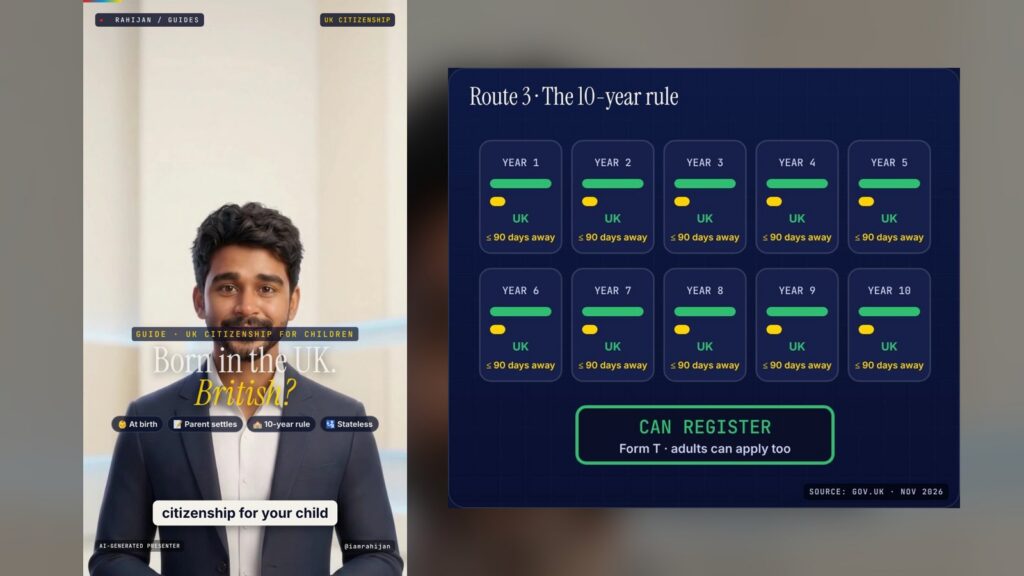
Guide · Checked against GOV.UK on 15 November 2026. Being born in the UK does not automatically make a child British. It depends on the parents’ status when the child was born, and on what happens afterwards. Here are the four main ways a child born in the UK can become a British citizen, what each one costs, and the deadlines that catch people out. The video is presented by an AI-animated version of me.
The short version
- At birth: usually British automatically if a parent was a British citizen or settled in the UK when the child was born.
- A parent settles later: register the child with form MN1 before they turn 18.
- The 10-year rule: a child who lived in the UK for their first 10 years, with no more than 90 days abroad in each year, can register with form T.
- Stateless children: born in the UK and stateless, with 5 years’ residence, can apply while under 22.
- Cost: £1,000 for an under-18 application. A fee waiver is available if the family cannot afford it.
1. Automatically British at birth
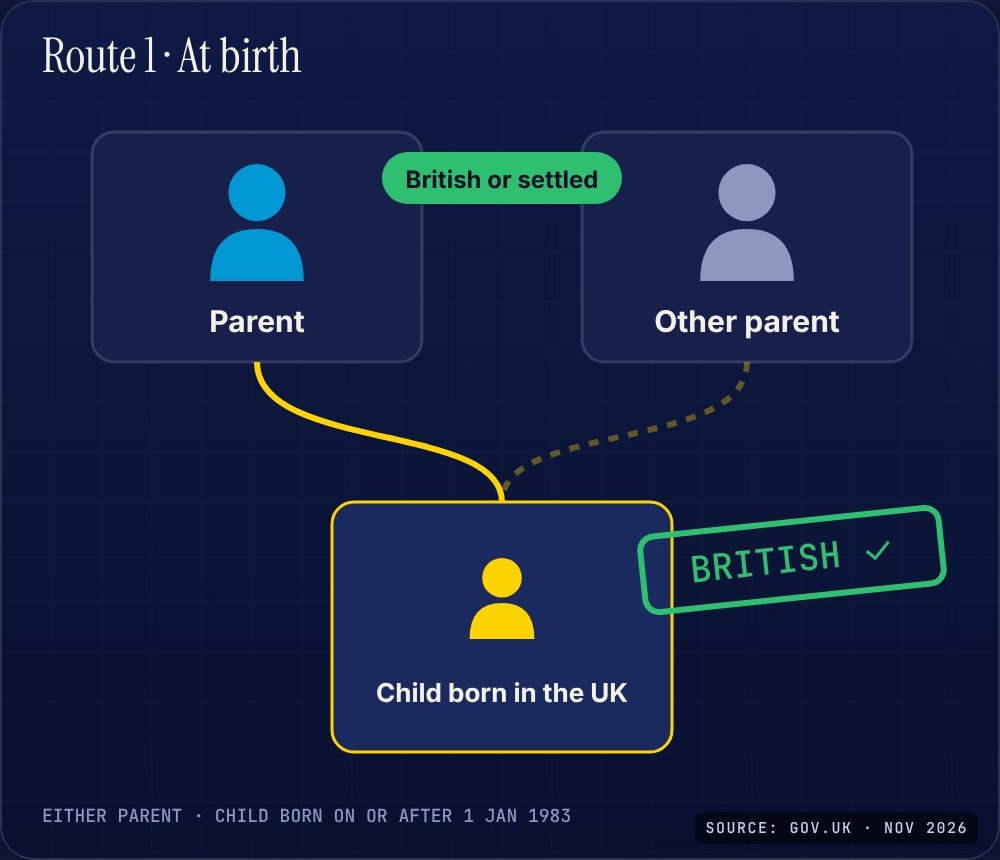
For a child born in the UK on or after 1 January 1983, GOV.UK says they are usually automatically a British citizen if one of their parents was a British citizen or “settled” in the UK when they were born. Settled usually means the parent had indefinite leave to remain (ILR), settled status under the EU Settlement Scheme, or permanent residence.
Timing matters: it is the parent’s status on the day of the birth that counts. For children born before 1 July 2006, a British or settled father only passed on citizenship automatically if he was married to the child’s mother. Children born in the UK before 1983 were generally British at birth, with narrow exceptions.
2. A parent becomes British or settled later: register before 18
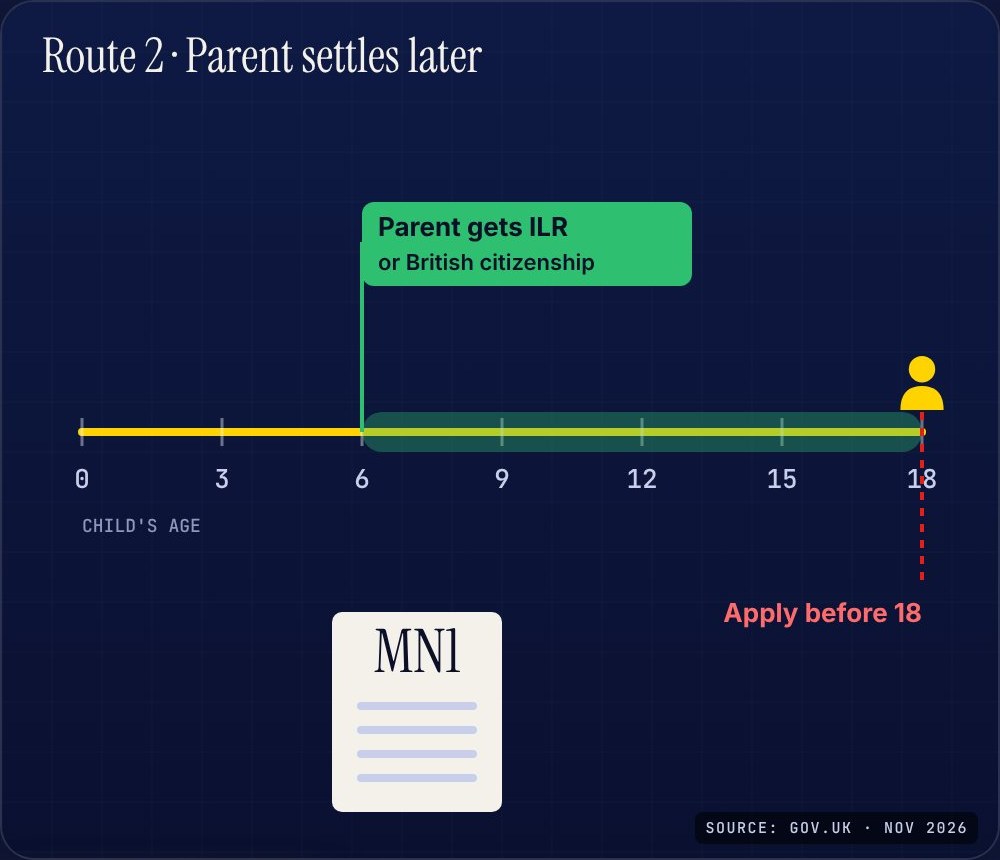
If neither parent was British or settled at the birth, but one of them later becomes a British citizen or gets ILR or settled status, the child can be registered as a British citizen. The child must be under 18 when you apply.
- Form: MN1, usually online. The child will need a biometrics appointment.
- Fee: £1,000. If the child turns 18 during the process, there is also a £130 citizenship ceremony fee.
- Decision: GOV.UK says usually within 6 months.
3. The 10-year rule
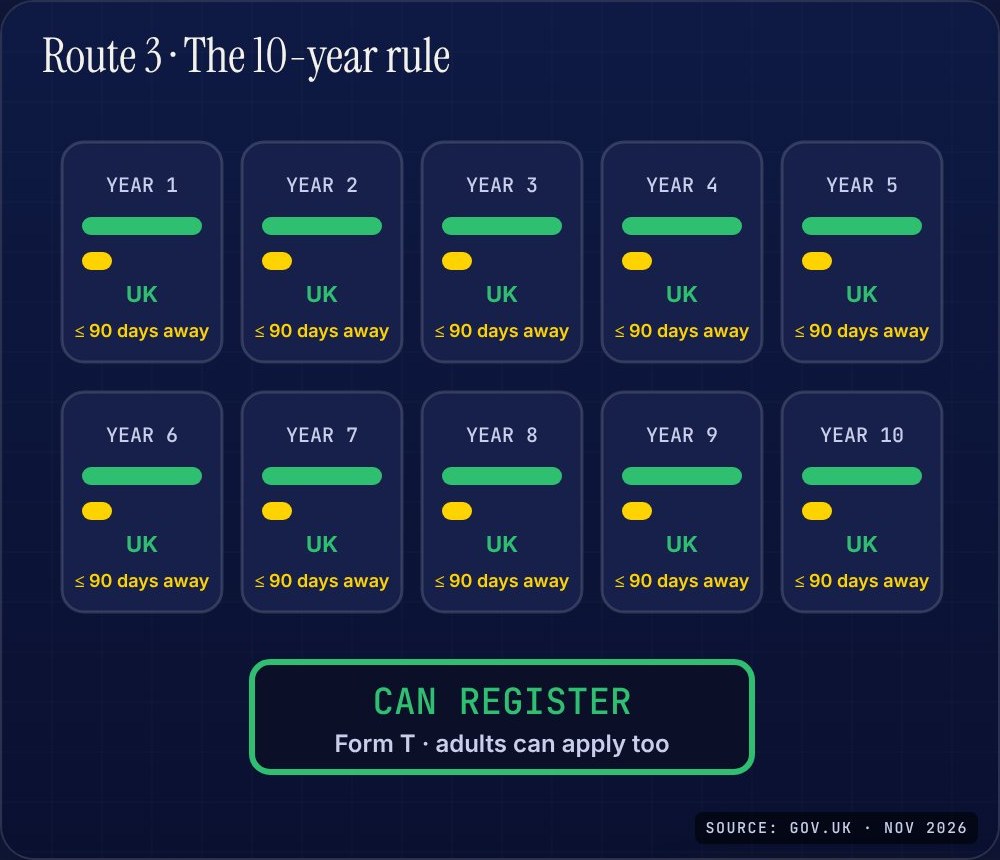
A child born in the UK who was not British at birth can register if they lived in the UK for the first 10 years of their life and did not spend more than 90 days outside the UK in any one of those years. GOV.UK says to explain on the form if there were special reasons for longer absences.
- Form: T.
- Fee: £1,000 if under 18. If over 18: £1,670 (£1,540 to apply plus the £130 ceremony fee), so adults can use this route too.
- Parents’ immigration status at the time of applying is not part of this test.
4. Children who are stateless
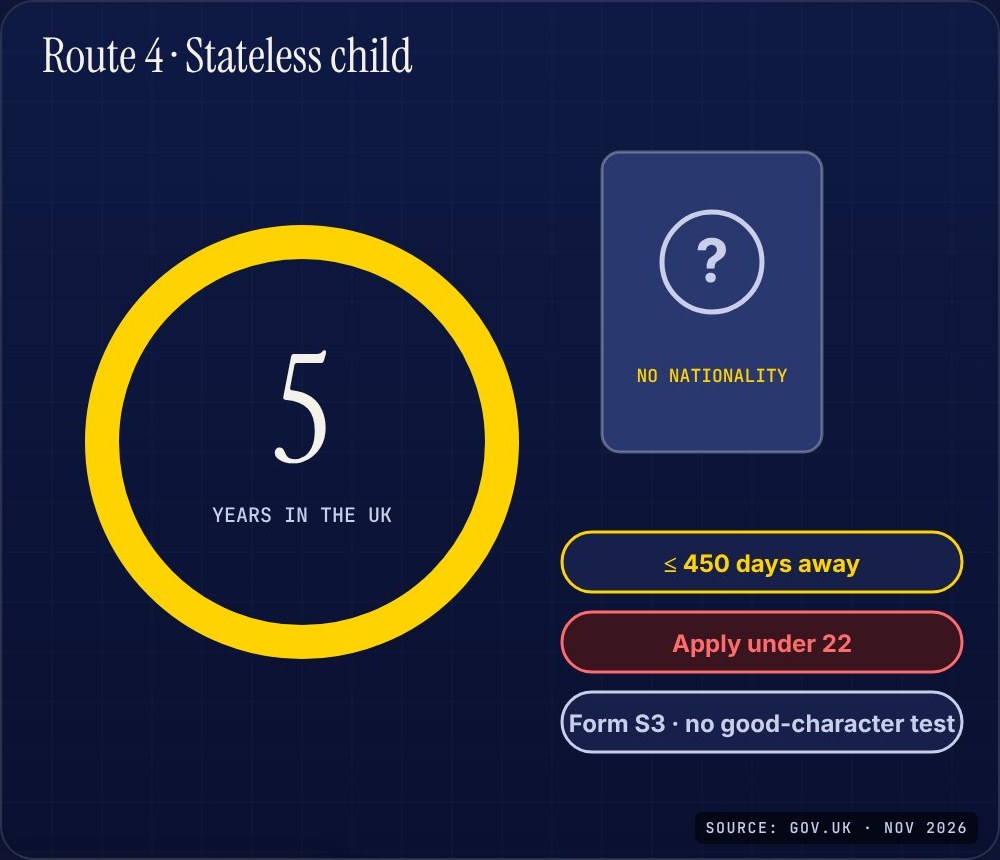
A child born in the UK on or after 1 January 1983 who has always been stateless can apply if they:
- are under 22,
- have lived in the UK for at least 5 years before applying, and were in the UK exactly 5 years before the Home Office receives the application,
- spent no more than 450 days outside the UK in those 5 years.
Children under 18 must also show it is not reasonable to expect them to get another country’s citizenship, for example through a parent. Use the online form or paper form S3. The fee is the same as the other routes: £1,000 under 18, £1,670 for 18 and over. The good character requirement does not apply to the statelessness provisions.
Fees and the fee waiver
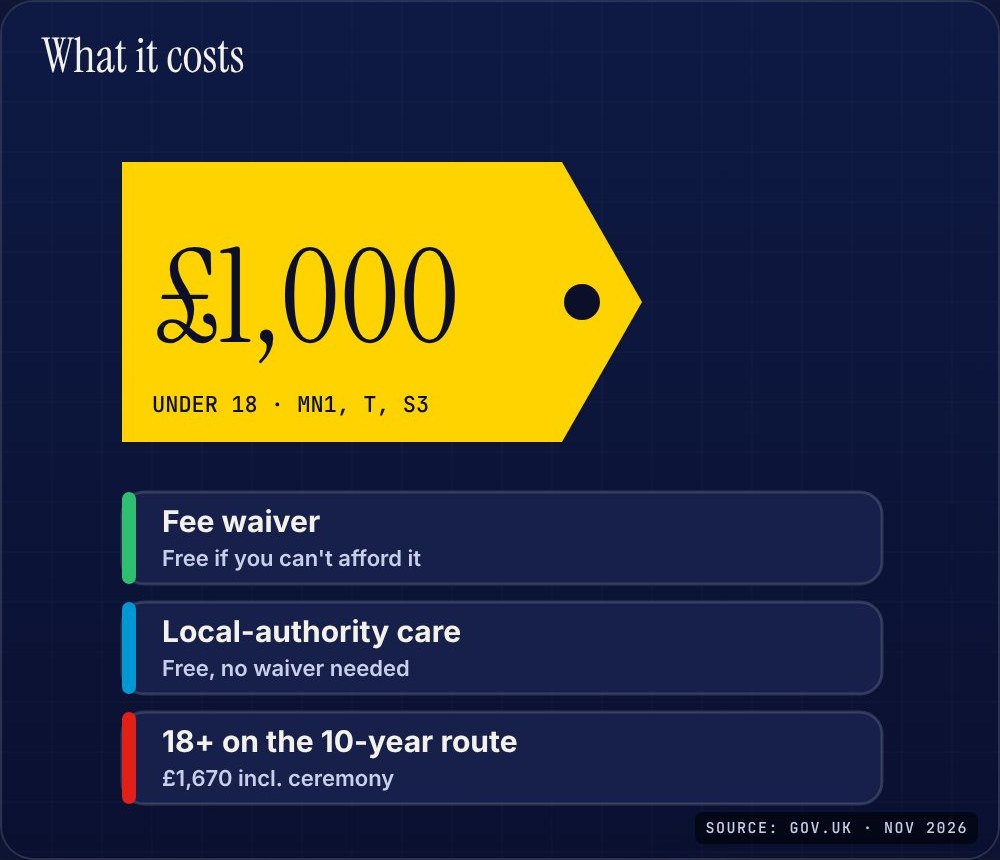
For under-18s the fee is £1,000 on all of these routes. If the child is eligible but the family cannot pay, for example because paying would leave them unable to meet essential living costs, a parent or guardian can apply for a fee waiver before the citizenship application. Children looked after by a local authority do not pay and do not need a waiver.
Good character from age 10
The Home Office’s good character requirement applies to anyone aged 10 or over on the date of application (apart from the statelessness routes). Convictions, cautions and some other conduct must be declared, so get advice if anything applies to your child.
Does the 2026 settlement shake-up change any of this?
The nationality routes above have not changed. But the government’s “earned settlement” plans, confirmed on 2 November 2026, would make many parents wait longer for ILR. That matters for route 2, because the child can only register once a parent is settled or British. The changes are due to be laid from the December Immigration Rules and are not law yet. I covered them here: ILR earned settlement confirmed.
Quick answers
- My child is 4 and neither parent has ILR. What now? Route 2 opens if a parent gets ILR or citizenship. Otherwise, route 3 opens at age 10. If the child is stateless, route 4 may apply after 5 years.
- My child was born outside the UK and I’ve just become British. These routes are for children born in the UK. Children born abroad have a separate registration route on GOV.UK.
- Can my child travel during the 10 years? Yes, but no more than 90 days away in each year, unless there were special reasons you can explain.
Sources
- GOV.UK: Apply for citizenship if you were born in the UK
- GOV.UK: If you’re under 18 (parent became British or settled)
- GOV.UK: If you lived in the UK until you were 10
- GOV.UK: Stateless, born in the UK on or after 1 January 1983
- Home Office: Registration as a British citizen, stateless persons (August 2026)
- GOV.UK: Get a fee waiver for a child’s citizenship application
- Home Office: Good character requirement
This is general information, not legal advice. Rules and fees change, so check GOV.UK or speak to a regulated immigration adviser (an OISC-registered adviser or a solicitor) about your child’s case. The video uses an AI-generated presenter and voice, based on me; scenes are illustrations.