US ELECTIONS · 4 NOVEMBER 2026
Results in this article are media projections as of the morning of 4 November 2026. Some races are still being counted, and numbers may change. This is a non-partisan explainer.
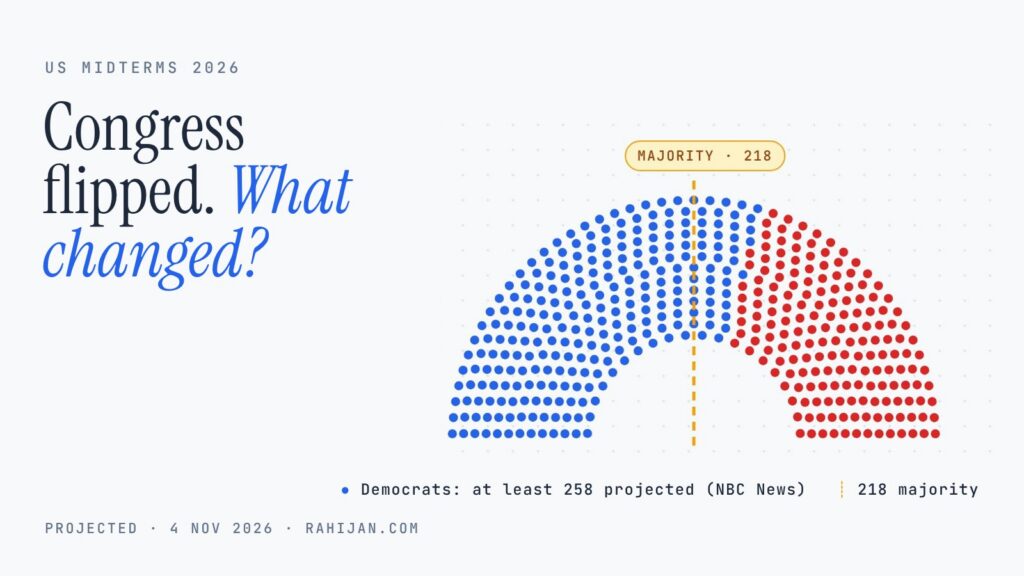
If you watched the 60-second video, you saw the headline: Democrats are projected to control both chambers of Congress from January. This post explains what was on the ballot, what changed, and what it means for the next two years. All results are media projections as of 4 November 2026, and a few races are still being counted.
What the midterms are
A US president serves four years. Halfway through that term, the country votes again for Congress and for many state offices. These are the midterm elections. The president is not on the ballot, but the result often reads like a verdict on the president’s first two years. The president’s party usually loses seats.
This year’s ballot was large:
- House: all 435 seats, because House members serve two-year terms
- Senate: 35 of the 100 seats, including 2 special elections, because senators serve six-year terms in staggered groups
- Governors: 36 states
The House: a new majority
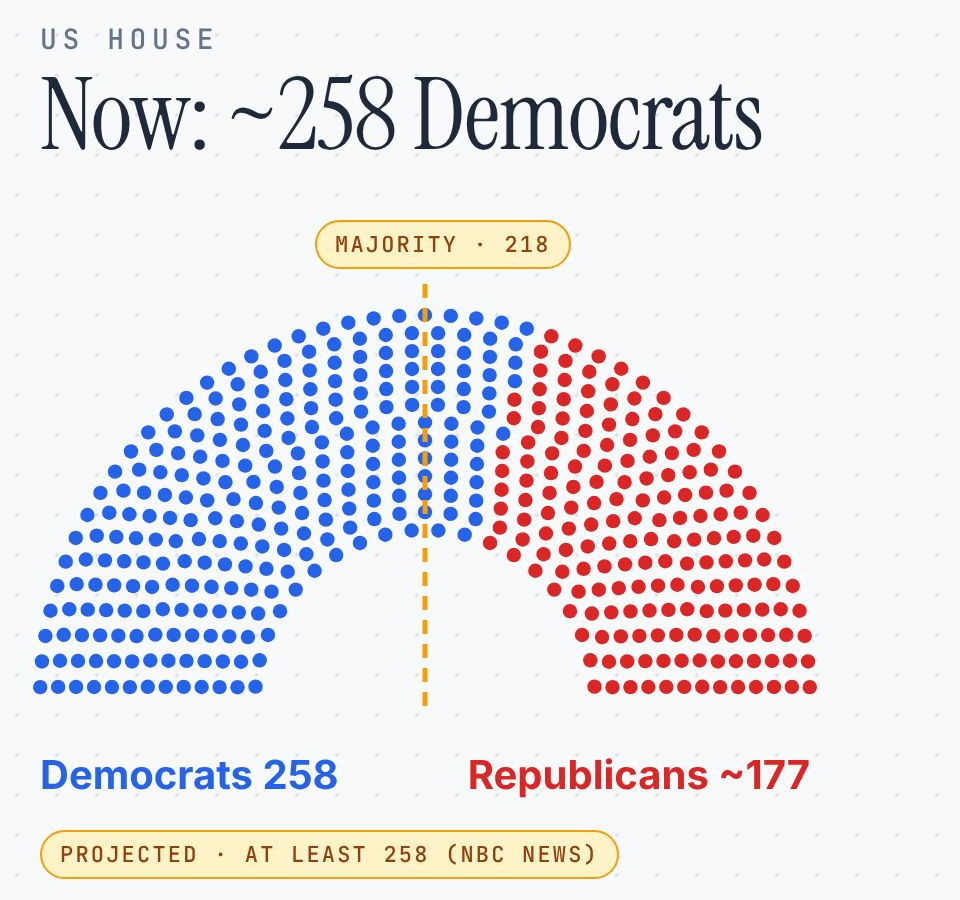
A party needs 218 seats to control the House. Before the vote, Republicans held 218 and Democrats held 214, with a few seats vacant. NBC News now projects Democrats will win at least 258 seats. That would be their largest House majority since 1993. The exact number may still move by a few seats.
Control of the House matters because the majority picks the Speaker, chairs every committee, and decides which bills get a vote.
The Senate: seven seats changed hands
Before the vote, Republicans held 53 Senate seats. Democrats held 47, counting 2 independents who vote with them. Democrats flipped 7 seats: Iowa, Kansas, Maine, North Carolina, Ohio, South Carolina and Texas.
Two races, Alaska and Mississippi, are still too close to call. Depending on those, the new Senate will have 54 to 56 seats on the Democratic side and 44 to 46 Republican. Either way, Democrats pass the 51 seats needed for a majority.
The Senate matters for more than laws. It also confirms judges, cabinet members and ambassadors.
Governors and the states
36 states chose governors. Democrats flipped five: Georgia, Iowa, Nevada, Ohio and Texas. That puts them at about 29 of the 50 governorships, up from 24. Governors run state budgets, and sign or veto state laws.
What divided government means
A bill becomes law only when the House and Senate pass it and the president signs it. President Trump, a Republican, keeps his veto. Congress can override a veto, but only with two-thirds of both chambers: 290 votes in the House and 67 in the Senate. Democrats are projected to fall short of both numbers.
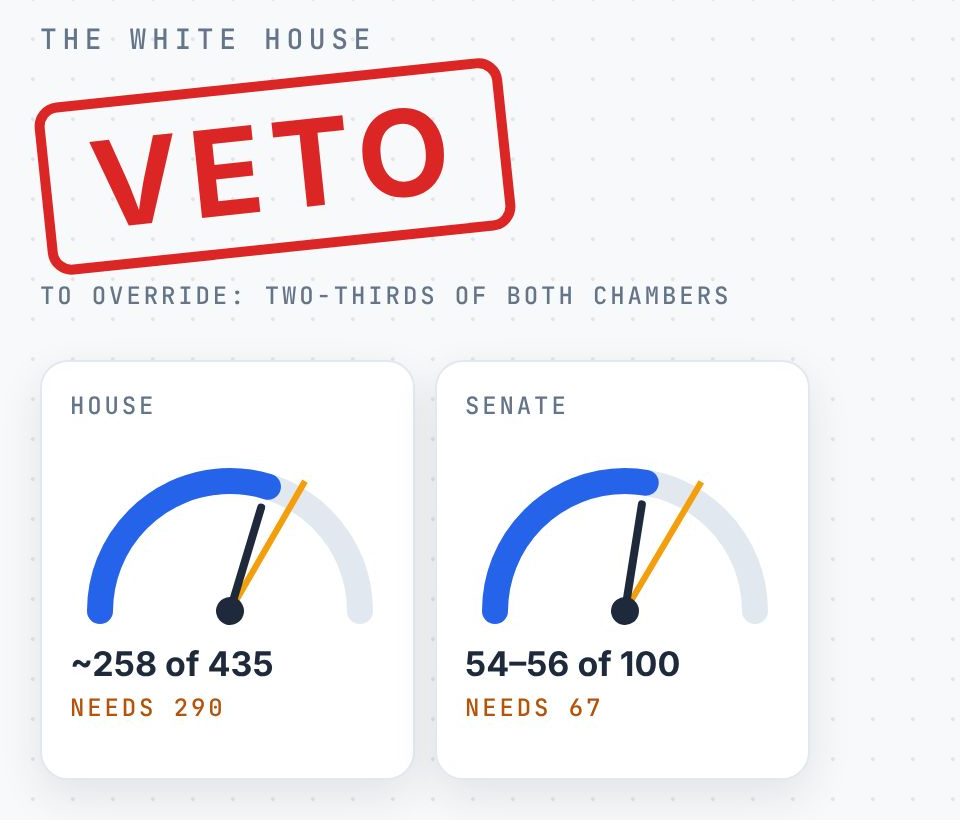
In practice, that points to three things from January:
- More oversight: committee chairs can hold hearings and issue subpoenas.
- More vetoes: bills the president opposes are likely to be blocked.
- Deals only by agreement: budgets and must-pass bills still need both sides.
The new Congress is sworn in on 3 January 2027. Until then, the current Republican majorities stay in charge.
The question to leave you with
Divided government has produced both standoffs and big bipartisan deals in the past. With a Democratic Congress and a Republican president, do you expect the next two years to bring more gridlock or more compromise? Tell me in the comments.